
Since its debut in 1993, Power Rangers has become one of the longest-running and most recognizable franchises in television history. Spanning dozens of seasons, multiple teams, and different generations of heroes, the series has managed to stay relevant for over three decades. One of the biggest reasons for its lasting appeal is how Power Rangers cleverly connects its seasons, creating a shared universe that rewards longtime fans while still welcoming new audiences.
A Shared Universe From the Very Beginning
Unlike many children’s shows that reset their storylines every season, Power Rangers established a shared universe early on. Mighty Morphin Power Rangers laid the foundation with recurring villains, mentors like Zordon, and iconic locations such as Angel Grove. As new seasons were introduced, the franchise rarely erased the past—instead, it built upon it.
This approach made the world of Power Rangers feel continuous and alive, where past events mattered and former heroes still existed beyond their original seasons.
Passing the Torch Between Ranger Teams
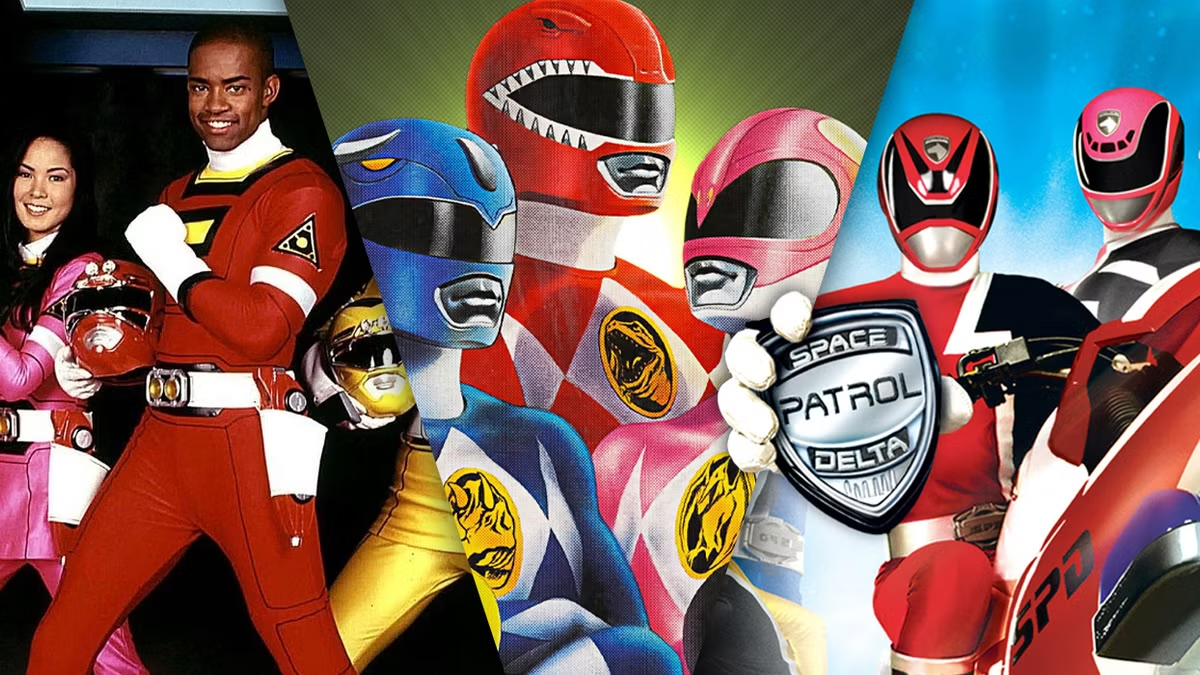
One of the most effective ways Power Rangers connects its seasons is through the concept of legacy. Many seasons directly reference previous Ranger teams, either by passing on powers, sharing technology, or acknowledging past battles.
Examples include:
-
Power Rangers Turbo transitioning directly into Power Rangers In Space
-
Power Rangers Zeo evolving from Mighty Morphin rather than starting fresh
-
Mentor figures like Tommy Oliver appearing across multiple eras
This “passing the torch” storytelling gives emotional weight to the franchise and reinforces the idea that being a Power Ranger is part of something bigger than one single team.
Team-Up Episodes and Crossovers

Few elements excite fans more than Power Rangers team-up episodes. These special crossover events bring together Rangers from different seasons to face a shared threat. Beyond the action and nostalgia, team-ups serve an important narrative function: they confirm that all seasons exist in the same timeline.
Notable examples include:
-
In Space crossing over with Lost Galaxy
-
Dino Thunder featuring veteran Rangers from earlier eras
-
Anniversary seasons like Super Megaforce celebrating the entire franchise
These episodes strengthen continuity and reward fans who have followed the series over time.
Recurring Villains and Mythology
Another key way Power Rangers links its seasons is through recurring villains and long-term threats. Characters like Rita Repulsa, Lord Zedd, and the Machine Empire don’t just disappear—they leave lasting consequences that echo into later seasons.
Some seasons explore the aftermath of earlier conflicts, while others reintroduce villains in new forms. This layered mythology adds depth to the franchise and makes the universe feel interconnected rather than episodic.
The Morphing Grid as the Ultimate Connector

Perhaps the most important narrative device in Power Rangers lore is the Morphing Grid. Introduced gradually and expanded over time, the Morphing Grid acts as a universal energy source that connects all Ranger powers across all seasons.
By tying every team—past, present, and future—to the same cosmic force, the franchise creates a logical explanation for how different Ranger abilities coexist. This concept allows writers to connect vastly different themes, from dinosaurs to space to magic, without breaking continuity.
Anniversary Seasons and Fan Service
Milestone seasons play a huge role in reinforcing connections across the franchise. Seasons like Power Rangers Dino Thunder, Megaforce, and Once & Always are packed with references, returning characters, and callbacks that celebrate the series’ history.
These moments are more than fan service—they reaffirm the idea that every season matters and that each Ranger’s story contributes to a larger legacy.
Why This Interconnected Storytelling Matters
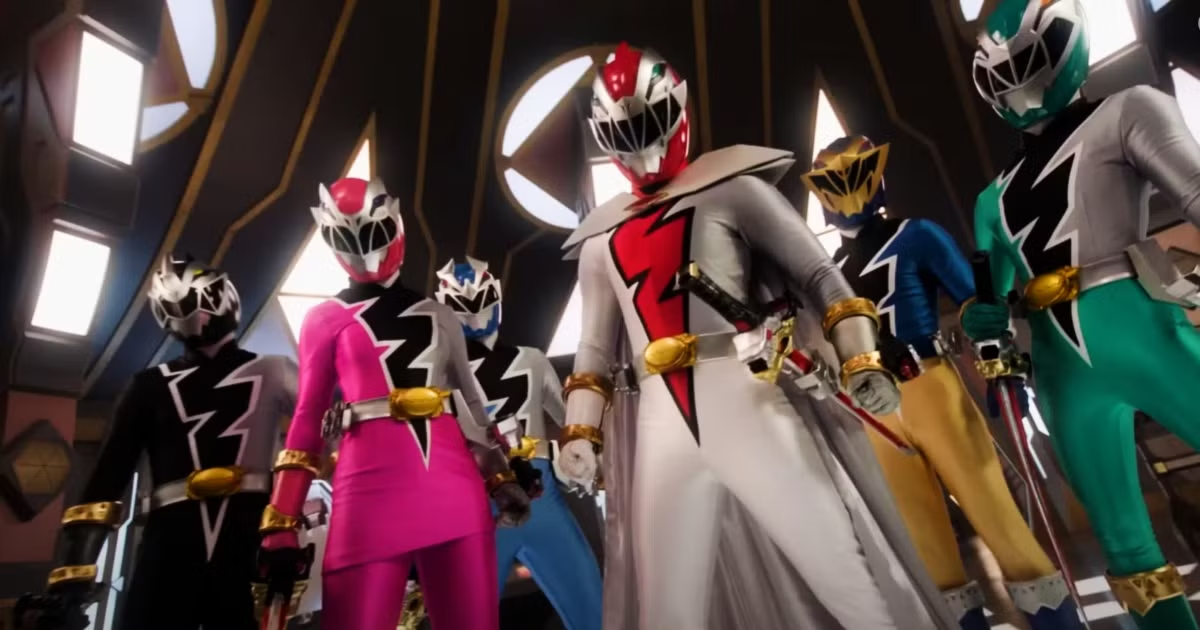
The interconnected nature of Power Rangers transforms it from a simple action show into a multigenerational saga. Fans grow up with the franchise, and the continuity allows them to feel that their favorite seasons are still relevant years later.
For newer viewers, these connections spark curiosity and encourage exploration of older seasons, keeping the franchise alive across generations.
Final Thoughts
The reason Power Rangers has endured for so long lies in its commitment to connection—between seasons, characters, and fans. Through shared lore, crossover events, recurring villains, and the Morphing Grid, the franchise creates a unified universe that feels both nostalgic and ever-evolving. Whether you’ve followed the Rangers since the 90s or discovered them recently, this continuity is what makes Power Rangers truly special.
👉 If you’re a Power Rangers fan looking to celebrate the legacy of every season and team, explore stylish apparel, collectibles, and fan-favorite merchandise at: powerrangersmall.com. It’s the perfect way to show your Ranger pride and bring a piece of the Power Rangers universe into your everyday life.
